10 Flowers Coloring Pages for Adult
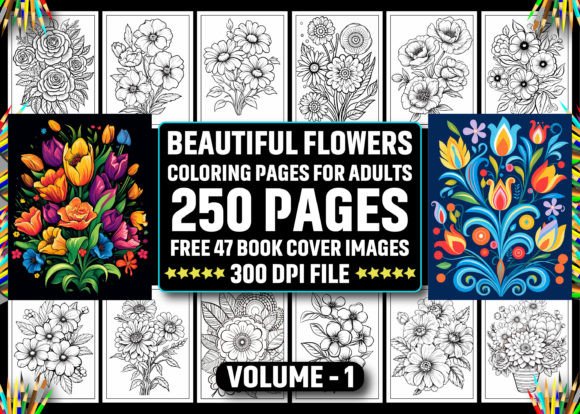
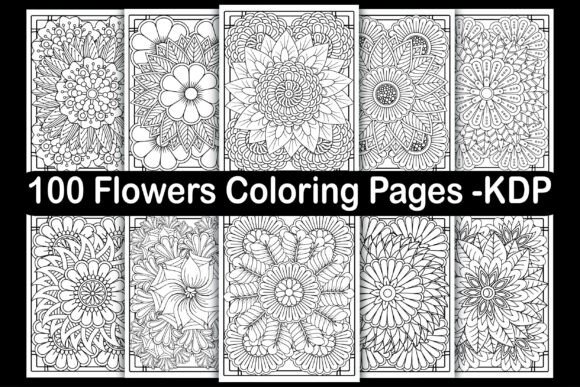
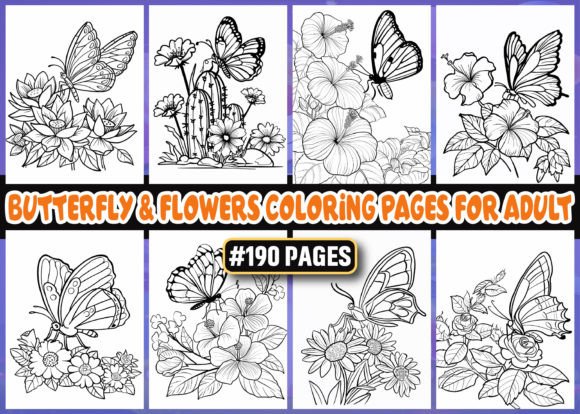
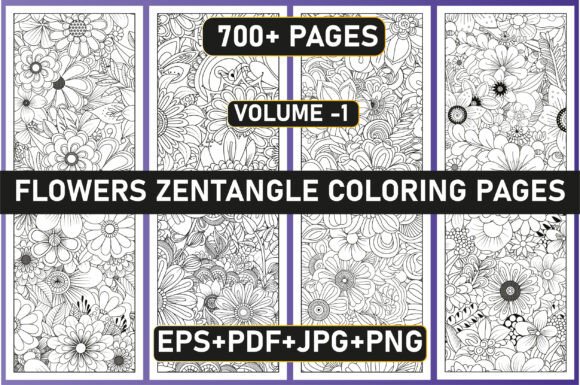
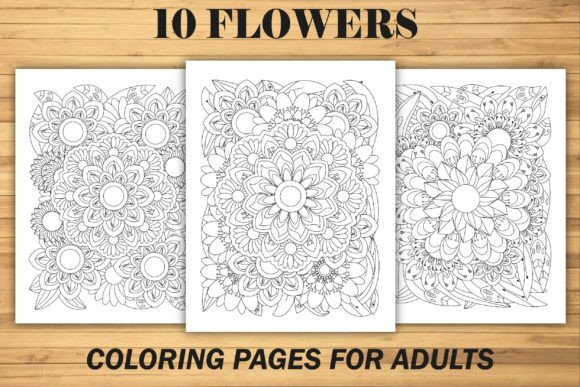
These aren’t just line drawings—they’re intentional creative tools. The 10 Flowers Coloring Pages for Adult collection is designed with purpose: clean linework, balanced negative space, and botanical motifs that invite focus without overwhelming. Each page features a distinct floral subject—delicate cherry blossoms, bold sunflowers, intricate peonies, structured dahlias, winding jasmine vines, symmetrical orchids, layered hydrangeas, sculptural calla lilies, wild poppies, and graceful lavender sprigs. No filler. No repetition. Just ten thoughtfully composed designs, sized precisely for A4 (8.5″ × 11″) and rendered at 300 DPI for crisp printing.
Why These Pages Work—Beyond Aesthetic Appeal
Adult coloring isn’t about nostalgia—it’s about cognitive anchoring. These pages support sustained attention through rhythmic line patterns and natural repetition found in petals, stamens, and leaf veins. Unlike overly dense mandalas or chaotic abstracts, the floral forms here offer gentle structure: enough guidance to quiet mental noise, but enough openness to encourage personal interpretation. That balance makes them effective for stress reduction, creative warm-ups, or even as low-stakes design studies.
Real Uses Across Real Roles
You don’t need to be an artist to use these meaningfully. Here’s how different professionals integrate them into daily work:
- Designers & illustrators use the EPS files to isolate petal shapes, recolor stems, or layer elements into custom pattern swatches—then export directly into branding assets or textile mockups.
- Educators & therapists print individual pages for mindfulness exercises, then pair them with short reflection prompts (“What part of this flower feels most grounded to you today?”) to deepen engagement without prescribing outcomes.
- Bloggers & content creators scan completed pages and overlay subtle text overlays for Instagram carousels—“How I Use Coloring to Refocus Before Client Calls”—turning process into relatable storytelling.
- Small business owners adapt one flower (e.g., the lavender page) into a branded thank-you card, adding their logo in the corner and printing on recycled matte stock—no custom illustration budget required.
- Self-publishers drop the PNGs straight into KDP interiors, adjusting bleed and margins once, then building a cohesive 60-page coloring book around this core set—adding title pages, instructions, and blank journal lines between designs.
Customization That Serves Your Goals—Not Just Your Preferences
The inclusion of editable EPS files changes what’s possible—not just “change the color,” but restructure intention. You can:
- Remove background leaves to create a minimalist single-bloom focus for meditation guides.
- Scale and duplicate a single dahlia center to build a seamless repeat tile for packaging design.
- Combine stem lines from three different flowers to draft a custom border for wedding stationery.
- Convert outlines to paths and apply variable stroke weights—thicker for outer petals, finer for inner details—to enhance tactile contrast when printed.
This isn’t about making something “prettier.” It’s about aligning form with function. If your audience values clarity, simplify layers. If they respond to texture, add subtle grain overlays in Photoshop before final export. If consistency matters across a series, use the same color palette across all ten—but let each flower define its own hierarchy of emphasis.
Practical Tips for Consistent, Audience-Ready Results
Before finalizing any use case, ask three questions:
- Who holds this page? A teacher handing it to a classroom needs durability—so JPEG or PNG at 300 DPI on 24 lb. copy paper works. A designer importing into Illustrator needs vector precision—so EPS is non-negotiable.
- Where does it live next? For digital sharing, compress PNGs using TinyPNG to retain quality under 500 KB. For print-on-demand books, verify that white backgrounds are truly #FFFFFF—not off-white—and that no stray anchor points sit outside the A4 canvas.
- What action should follow? If it’s meant to spark journaling, leave margin space on the right side. If it’s for social media, center the design with 0.75″ padding on all sides for safe cropping.
Also: test print one page first. Check for unintended halos around fine lines, ensure stem thickness reads clearly at 75% zoom, and confirm that petal overlaps don’t vanish into solid black when scaled down. These aren’t flaws in the file—they’re cues to adjust your output settings for your specific context.
More Than a Download—A Starting Point With Direction
The .zip contains more than assets—it contains permission to iterate. The 10 Flowers Coloring Pages for Adult were built so you don’t have to choose between fidelity and flexibility. You get ready-to-print JPEGs for immediate use, transparent-background PNGs for digital layering, and fully editable EPS files for structural adaptation—all in one consistent resolution and size.
That means you can start small: print one page, color it with gel pens, photograph it in natural light, and post it with a two-sentence insight about how the rhythm of the tulip’s curve helped you reset mid-afternoon. Or go systemic: license the EPS set, modify three flowers into seasonal variants (spring cherry, summer sunflower, fall dahlias), and bundle them as a micro-course on “Botanical Design Thinking.”
There’s no “right” way to use these—only ways that serve your current objective, audience, and capacity. What matters is that each flower was drawn with intention, each file formatted for real-world constraints, and every pixel placed to support clarity—not clutter.
You’ll receive all 30 files (10 × 3 formats) in a single .zip—no subscriptions, no watermarks, no usage limits. Just high-resolution, professionally prepared interiors, ready to become whatever your next project needs them to be.