Black Girl Coloring Pages - Magic Black
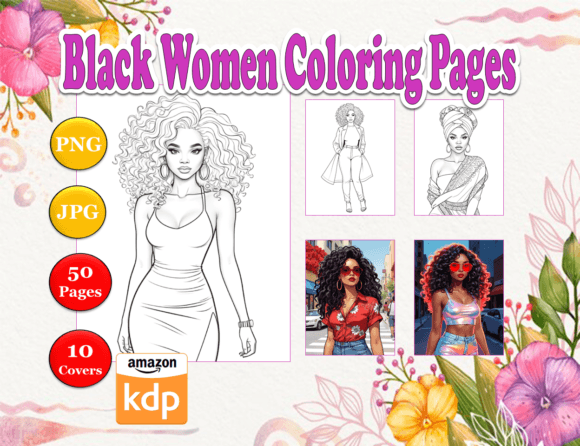
Coloring isn’t just for children anymore—it’s become a quiet act of resistance, restoration, and representation. Black Girl Coloring Pages - Magic Black meets this moment with intention: 50 original, high-resolution coloring pages celebrating Afro women in all their diversity—curly crowns, bold silhouettes, cultural motifs, quiet confidence, and radiant joy. Designed specifically for adults, these pages aren’t generic illustrations repurposed for a demographic—they’re crafted with care for Black identity, self-affirmation, and creative autonomy.
Why Representation Matters—Beyond Aesthetic
For decades, mainstream coloring books featured narrow beauty standards: light skin tones, Eurocentric features, and culturally neutral or vaguely “ethnic” patterns stripped of context. That gap mattered—not just symbolically, but practically. When adult colorists search for relatable imagery, they’re not just looking for something to fill with color; they’re seeking resonance. A woman with locs wrapped in indigo-dyed fabric. A girl reading under a mango tree, her afro haloed by sunbeams. An elder with hands etched by time and tradition, holding a clay vessel. These aren’t decorative add-ons. They’re affirmations rendered in line art.
This shift reflects broader cultural movement—not just in publishing, but across education, mental wellness, and digital content creation. Therapists now recommend culturally grounded art interventions for clients navigating racial stress. Educators use inclusive coloring pages in social-emotional learning modules. And creators building on platforms like Etsy, Amazon KDP, or Canva are prioritizing authenticity over algorithmic appeal. Black Girl Coloring Pages - Magic Black responds directly to that demand—not as trend-chasing, but as thoughtful alignment with real user needs.
Designed for Creators, Not Just Consumers
What sets this interior apart is its dual-purpose architecture: it serves both end users *and* the people who build from it. The package includes 50 PNG files (transparent background, ideal for layering or digital editing) and 50 JPG files (optimized for print clarity), all at 300 DPI and sized to A4 (8.5″ × 11″) with bleed—no guesswork needed for professional printing. Ten cover options give flexibility for branding, niche targeting (e.g., “Afro Joy”, “Crown & Calm”, “Heritage Lines”), or seasonal launches.
That “Interior Edit, resize your own think” note isn’t marketing fluff—it’s functional clarity. Whether you’re a freelance designer adding custom borders, a small press integrating pages into a themed wellness journal, or an educator adapting images for classroom handouts, the files support iteration without degradation. No locked layers. No watermarked previews. Just clean, scalable line art ready for your workflow—whether you're using Adobe Illustrator, Affinity Designer, or even free tools like Photopea or Inkscape.
How This Fits Into Modern Creative Workflows
Today’s creators operate across multiple channels—and expectations have shifted. Buyers don’t just want a finished product; they want agency. That means editable assets, adaptable formats, and compatibility with common tools. The inclusion of both PNG and JPG versions acknowledges that reality: PNGs allow for digital customization (think Instagram story templates, Canva overlays, or Procreate brushes), while JPGs ensure crisp, predictable results when printed through KDP, Printful, or local print shops.
Consider a freelance graphic designer building a client’s self-care brand. She might take one of the interior pages—say, a woman meditating beneath a baobab tree—and integrate it into a guided journal layout, adjusting spacing to accommodate reflection prompts. Or a blogger curating a “Black Joy Toolkit” could embed a resized version into a newsletter as a printable download—using the transparent PNG to overlay text cleanly. The bleed-ready sizing means no last-minute cropping surprises before upload to KDP, where formatting errors still cause 30–40% of initial rejection reasons among new publishers.
More Than Coloring: A Tool for Intentional Practice
Adult coloring has evolved beyond stress relief. Research increasingly points to its role in grounding, focus training, and even memory anchoring—especially when paired with meaningful imagery. When the subject matter mirrors lived experience, the practice deepens. A teacher using these pages in a middle school art elective isn’t just teaching line weight or shading technique; she’s inviting students to see themselves in the canon of visual storytelling. A therapist might select a page featuring intergenerational connection—two women braiding hair—to open conversations about family narratives or cultural continuity.
This isn’t about prescriptive interpretation. It’s about removing barriers to entry—both technical and symbolic. High-resolution files mean no pixelation when zoomed in for fine-detail work. A4 sizing aligns with global printing standards, supporting creators outside the U.S. And the absence of text or captions on interiors gives users full interpretive freedom—no assumptions imposed, no messages overwritten.
Realistic Use Cases Across Roles
- Small business owners: Bundle five pages as a lead magnet (“5 Afro Joy Coloring Pages + Self-Care Checklist”) to grow an email list focused on wellness or identity-affirming resources.
- Educators: Print single pages for classroom stations—pair with short biographies of Black artists, scientists, or community leaders to reinforce representation across subjects.
- KDP publishers: Combine this interior with your own original cover, introduction, and bonus pages (e.g., color theory tips, artist spotlight interviews) to launch a differentiated title in a crowded category.
- Freelance designers: Use the PNGs as base layers in Figma or Sketch to prototype interactive coloring apps—testing UI flows for accessibility, contrast, and intuitive tool placement.
- Content creators: Film a timelapse of coloring one page live on TikTok or YouTube Shorts, narrating personal reflections—building connection without requiring original illustration skills.
What Has Changed—and What Hasn’t
Five years ago, finding professionally formatted, culturally specific coloring pages required commissioning custom artwork or sifting through low-res downloads riddled with copyright ambiguity. Today, access has improved—but quality consistency hasn’t kept pace. Many “diverse” collections still rely on clipart-style figures, inconsistent linework, or tokenistic imagery. Black Girl Coloring Pages - Magic Black addresses that gap not by claiming novelty, but by delivering reliability: consistent stroke weight, intentional negative space for shading, and compositions that honor proportion and expression without caricature.
What hasn’t changed is the core need: space to create without explanation, to rest without apology, to reflect without erasure. The tools have gotten better—higher resolution, broader format support, clearer licensing—but the human reason remains steady. That’s why this interior doesn’t chase viral aesthetics. It prioritizes usability, dignity, and quiet strength in every line.
Getting Started—Without Overcomplicating
You don’t need a studio, a subscription, or a design degree to begin. Start with one file. Open it in Preview (Mac) or Photos (Windows) to test print settings. Try resizing a PNG in Canva to fit a social post. Import a JPG into your favorite PDF editor and add a simple title block. Notice how the bleed area gives breathing room—no critical detail lost at the edge. Then ask: what would make this useful *for your goals*? A branded workbook? A classroom resource? A gift for a friend celebrating a milestone?
The value isn’t locked in the files alone—it’s activated through your intent, your audience, and your willingness to adapt rather than adopt wholesale. That’s the quiet power of Black Girl Coloring Pages - Magic Black: it offers structure so you can focus on meaning.