Llama Coloring Book for Kid s Interior
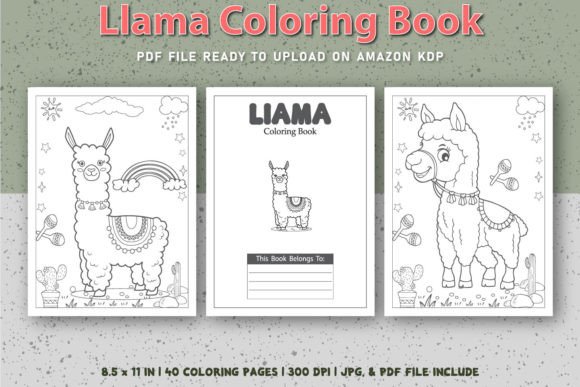
Imagine flipping through a coloring book where every page feels like a quiet invitation—not just to color, but to pause, breathe, and reconnect. That’s the quiet magic of the Llama Coloring Book for Kid s Interior. Designed thoughtfully for children aged 4–8, it’s not just a collection of outlines—it’s a curated visual experience grounded in cultural warmth, gentle complexity, and age-appropriate detail. Each of the 40 illustrations features llamas as joyful central characters: grazing on sun-dappled slopes, wearing woven Andean textiles, nestled beside condors or snow-capped peaks, or playfully interacting with geometric patterns inspired by Quechua motifs. The linework balances clarity with subtle texture—clean enough for small hands to follow, expressive enough to spark storytelling.
The interior pages avoid heavy contrast or overly tight spacing. Lines are confident but not rigid; contours soften slightly at edges, giving each drawing a hand-drawn sincerity without sacrificing reproducibility. There’s no bleed—meaning clean, predictable margins when printed—and the 8.5″ × 11″ format fits standard printers and binding workflows seamlessly. Whether you're preparing files for Amazon KDP, bundling into a themed activity kit, or integrating into an educational curriculum, these interiors are built for real-world use—not just aesthetic appeal.
Why This Interior Works Where Others Don’t
Many coloring book interiors fall into one of two traps: oversimplified line art that feels repetitive after five pages, or hyper-detailed scenes that overwhelm younger children. The Llama Coloring Book for Kid s Interior avoids both by calibrating complexity intentionally. Look closely—you’ll notice how negative space is used deliberately: open fields invite broad strokes with crayons, while a llama’s textured fleece or a patterned blanket offers gentle challenges for developing fine motor control. That balance isn’t accidental. It reflects an understanding of developmental milestones, print production constraints, and the unspoken need for *calm engagement*—not just busywork.
This makes it especially effective in settings where attention spans are short but curiosity is high: classroom warm-ups, waiting-room kits, travel companions, or even therapeutic tools for kids navigating transitions. Teachers report that the cultural grounding—llamas as native Andean animals, not cartoon mascots—opens natural doors to geography, animal science, and respectful representation. No forced “lesson,” just quiet opportunities for questions and connection.
Design Flexibility Beyond the Page
While created for coloring books, these interiors function surprisingly well as versatile design assets. Because the illustrations are delivered as high-resolution JPG and PDF files—print-ready, layered cleanly, and tested across KDP’s preview system—they integrate smoothly into broader creative projects. A marketer building a South American-themed product launch might pull a single llama-and-mountain scene for social media banners. A craft business could adapt the textile motifs into SVG files for iron-on transfers or printable gift tags. An indie publisher assembling a bilingual Spanish-English activity series can drop these pages directly into InDesign layouts alongside custom typography—no redrawing, no licensing guesswork.
That reliability matters. Unlike clipart libraries where consistency wobbles across images, this set maintains a unified line weight, proportional scale, and compositional rhythm. You’re not stitching together disparate elements—you’re working from a cohesive visual language. That cohesion supports brand identity work, too. If your small business centers around mindful childhood experiences, these illustrations reinforce calm, authenticity, and cultural curiosity without needing explanatory text.
Practical Integration Tips for Creators
Before adding these interiors to your next project, consider three quiet but critical checks:
- Test readability at actual size. Zoom out to 100% on screen, then print a sample page. Do thin lines hold up on your target paper stock? Does the llama’s eye stay legible at ¼ inch tall? Small details matter most when scaled down for digital previews or mini-books.
- Review file structure before automation. Since the package includes both JPG and PDF versions, verify which format suits your workflow. PDFs preserve vector-like crispness for resizing; JPGs load faster in bulk email campaigns or web galleries. Don’t assume one fits all contexts.
- Check commercial scope early. These files are licensed for commercial use—including resale in physical books and digital downloads—but always confirm whether derivative works (like tracing and re-exporting as new line art) fall under permitted usage. When in doubt, consult the license summary—not assumptions.
Pairing these interiors with typography is intuitive but worth intention. For cover text or instructional headers, a friendly sans serif—think Quicksand or Nunito—complements the hand-drawn warmth without competing. Avoid overly decorative display fonts that clash with the llamas’ gentle presence. In editorial layouts, modest leading (1.4–1.6) and generous margins let the illustrations breathe—enhancing both focus and relaxation value.
A Thoughtful Tool, Not Just Another Asset
What sets the Llama Coloring Book for Kid s Interior apart isn’t novelty—it’s fidelity. Fidelity to its audience’s needs, to print realities, to cultural nuance, and to the quiet power of unhurried creativity. It doesn’t shout. It invites. It doesn’t chase trends. It endures.
For designers building activity-based products, it saves weeks of illustration iteration. For educators, it offers scaffolding—not scripts—for meaningful engagement. For small publishers, it’s a proven, KDP-tested foundation that converts because it delivers what families actually reach for: simplicity with soul, clarity with charm, and color-ready joy that starts the moment the page turns.
If your work lives at the intersection of care and craft—if you choose assets not just for function but for feeling—this interior earns its place not as background filler, but as a thoughtful collaborator in every project it touches.